


Consultant Dermatologist led Assessment and Treatment
At Kent Skin and Laser Clinic, we provide Consultant Dermatologist led assessment and treatment of warts and verrucas, ensuring accurate diagnosis and appropriate management for lesions affecting the skin.
Warts are common viral skin lesions that may vary in appearance and persistence. Assessment allows differentiation between viral warts and other skin lesions, ensuring that treatment is clinically appropriate.
What are warts and verrucas?
Warts are benign skin growths caused by the human papillomavirus (HPV) and can occur on various areas of the body, most commonly on the hands.
Verrucas are warts that occur on the soles of the feet and may become painful due to pressure when walking.
Lesions may present as:
- Rough or raised growths
• Thickened areas of skin
• Small clustered lesions
• Firm lesions on weight-bearing areas of the foot


Clinical assessment
Assessment is important to confirm diagnosis, particularly as some lesions may resemble other conditions.
Consultation includes:
- Clinical examination of the lesion
• Dermatoscopic assessment where required
• Differentiation from other benign or pre-cancerous lesions
This ensures that management is based on an accurate clinical diagnosis.
Treatment considerations
Not all warts require treatment, and some may resolve spontaneously over time.
Treatment may be considered where lesions:
- Are painful or symptomatic
• Persist or spread
• Interfere with daily activities
• Are cosmetically concerning
Management is individualised depending on the location, duration and characteristics of the lesion.

Treatment options
- Cryotherapy
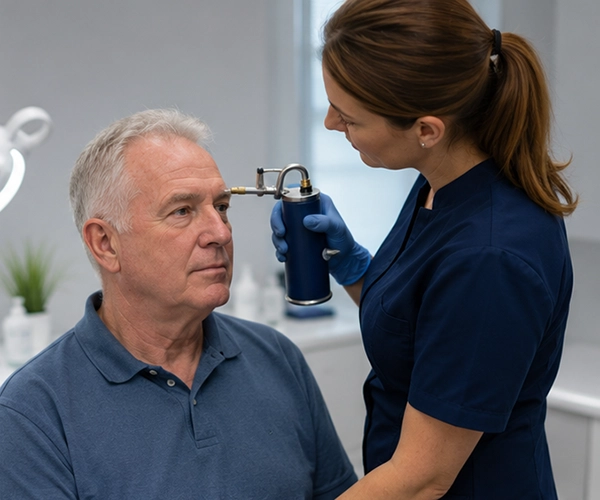
Cryotherapy is commonly used in the treatment of warts and verrucas and involves the application of liquid nitrogen to the lesion.
This works by:
- Freezing the affected tissue
• Damaging virus-infected cells
• Stimulating an immune response
Treatment may require a course of sessions depending on the size and persistence of the lesion.
Additional treatment options
Depending on clinical assessment, alternative or adjunctive treatments may include:
- Topical treatments
• Keratolytic therapies
• Other dermatological interventions where appropriate, including laser treatment or surgery?
The most suitable approach is determined based on clinical presentation and response to treatment.
Practical aspects of treatment
- Treatments are performed in-clinic
• Cryotherapy is a quick procedure
• Mild discomfort may occur during and after treatment
• Multiple sessions may be required at regular intervals
Intervals between treatments are determined according to clinical response and tolerance.
Relationship to other conditions
Some lesions may initially appear similar to warts but represent other skin conditions, including:
- Seborrhoeic keratoses
• Callus or corns
• Benign skin lesions
Assessment ensures that these are appropriately identified and managed.
FREQUENTLY ASKED QUESTIONS
No — some warts may resolve without treatment. Intervention is usually considered if lesions are symptomatic or persistent.
This varies depending on the lesion. A course of treatment is often required for more persistent warts.
Cryotherapy may cause a short period of discomfort during treatment, which generally settles quickly.
Warts may recur, as they are caused by a viral infection. Further treatment can be provided if needed.
Management is similar, although verrucas may require additional consideration due to pressure on the feet.