


We treat sun damage, age spots, melasma, and uneven skin tone using evidence‑based laser, IPL and skincare approaches. Our doctors and laser specialists will assess your skin and recommend the safest and most effective treatment plan. Please see here for further information on age spots and sun damage.
Treatment options
- Laser or IPL pigmentation removal
- Medical‑grade skin peels
- Prescription skincare
- Combination treatment plans
What to expect
- A consultation and skin assessment
- A personalised treatment plan
- Gradual improvement in clarity and tone
What is Melasma?
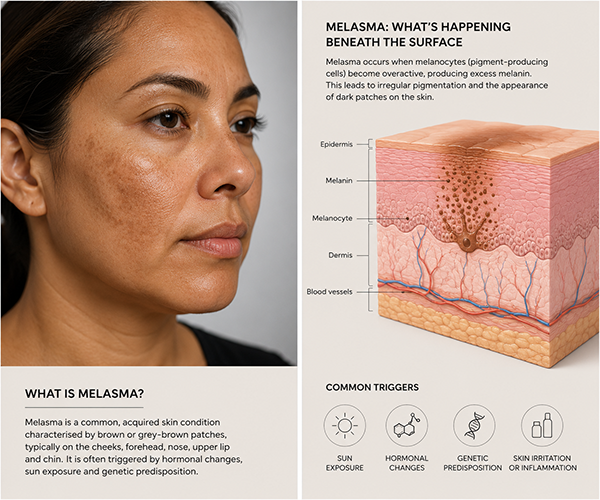
Melasma is a common skin condition that causes areas of brown or grey-brown pigmentation, most often seen on the face, particularly the cheeks, forehead, upper lip, and chin. It appears as patches rather than individual marks and can vary in intensity.

What causes Melasma?
Melasma is caused by an overproduction of pigment (melanin) in the skin. It is commonly triggered by a combination of factors, including sun exposure, hormonal changes (such as pregnancy or the contraceptive pill), and genetic predisposition.
Heat and light can stimulate pigment-producing cells, which is why melasma can be persistent and may worsen without proper protection.
How is Melasma managed?
Melasma is a chronic condition, but it can be effectively managed with the right approach.
Strict sun protection is essential, as UV exposure can worsen pigmentation and reduce the effectiveness of treatment.
At Kent Skin and Laser Clinic, we offer a range of medical-grade treatments tailored to melasma, which may include carefully selected laser or IPL treatments and other in-clinic options. These treatments aim to gently reduce pigmentation and improve overall skin tone.
Melasma requires a cautious and personalised approach, as overly aggressive treatment can sometimes worsen the condition. Many patients see gradual improvement over a course of treatments, alongside a consistent home skincare routine.
Other causes of pigmentation
Not all pigmentation is due to melasma. A number of different conditions can cause changes in skin colour, and accurate diagnosis is important in guiding appropriate treatment.
Other common causes include:
- Post-inflammatory hyperpigmentation (PIH)
Pigmentation that develops following inflammation or injury to the skin, such as acne, eczema, burns, or cosmetic procedures. - Solar lentigines (sun spots)
Flat brown lesions caused by cumulative sun exposure, commonly seen on the face, hands and décolletage. - Drug-induced pigmentation
Changes in skin colour associated with certain medications. - Hormonal pigmentation beyond melasma
Pigment changes can also occur in association with hormonal imbalance. - Pigmented lesions (naevi / moles)
Benign pigmented lesions may resemble other types of pigmentation and require clinical assessment. - Inflammatory or less common conditions
Certain inflammatory skin conditions can result in patchy or diffuse pigmentation. - Lichen planus pigmentosus and other inflammatory disorders
Less common conditions that can result in diffuse or patchy pigmentation. - Haemosiderin staining
Pigmentation caused by breakdown of blood products, often seen in areas of chronic inflammation or vascular conditions.
Because different types of pigmentation respond differently to treatment, clinical assessment is important to determine the underlying cause.
FREQUENTLY ASKED QUESTIONS
Melasma is a chronic condition, meaning it may persist or recur over time. However, it can often be effectively managed with appropriate treatment and ongoing skincare.
In some cases, Melasma may fade, particularly if triggered by hormonal changes. However, it often requires ongoing management to maintain improvement.
Sun exposure is one of the main triggers for melasma. Daily use of high-level SPF is essential to prevent worsening and to support the effectiveness of treatment.
Carefully selected laser or IPL treatments may help improve pigmentation, but melasma requires a cautious approach as overly aggressive treatment can worsen the condition.
No — treatment depends on the underlying cause. Different types of pigmentation, such as melasma, sun damage or post-inflammatory pigmentation, require different management approaches.